
Classic Slots Online UK: How They Work
 Available in GB
Explore the simple reels, symbols, paylines and staking rules behind classic online and fruit slot machines.
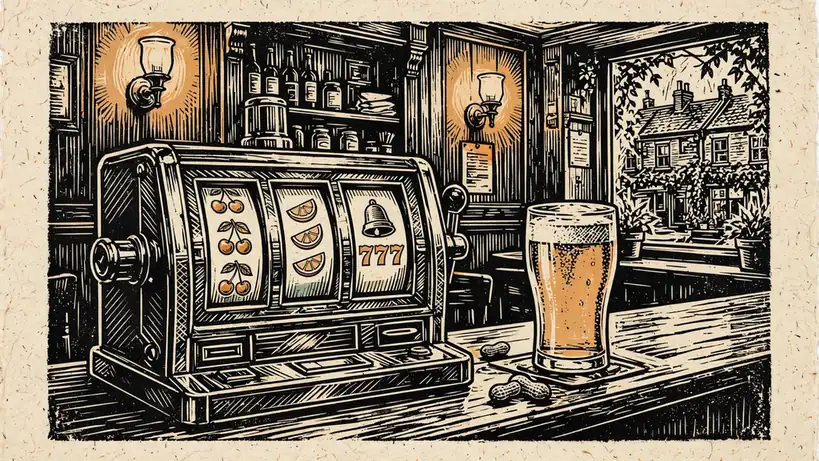
Table of Contents
- What Defines a Classic Slot in the UK
- Classic Slot Machines: From Pub Fruit Machines to Online Models
- How to Assess a Classic Slots Casino in the UK
- Classic Slot Games and Their Core Mechanics
- How to Play a Classic Slot Online
- Real-Money Classic Slots: Stakes, Returns and UK Controls
- What “Classic Slot UK” Means in Practice
- Free Classic Slots Without a Cash Stake
- Classic Fruit Slots and the British Pub Tradition
- Classic Slot Machine Symbols: What They Tell You
What Defines a Classic Slot in the UK
A classic slot is defined by a deliberately simple layout and a small set of clearly visible rules. Instead of presenting a large grid, many bonus stages and several layers of changing features, it normally centres on reels, symbols, paylines and a fixed stake. The design may look familiar, but the important point is how the result is produced and how the win condition is shown.
The word “classic” describes the game format rather than a specific manufacturer, casino or machine. A classic slot can appear in a physical gaming machine or as an online game. When you play classic slots online UK sites may display the same basic arrangement in a digital interface, but the screen does not change the underlying model. You still select a stake, start a spin, observe the reel result and compare the symbols with the paytable.
The three-reel layout
Three-reel classic slots are the clearest example of the format. The reels are shown vertically, usually with one visible symbol position on each reel. A spin creates one symbol result per reel, producing a short combination that is easy to read from left to right.
This list highlights UK-licensed operators for players exploring classic slots online in the UK in 2026. Use the key details to identify the options that best fit your preferences for bonuses, deposits and payout times.
License: UKGC Operator Licence · Bonus: £200 welcome bonus · Payout speed: Within 48 hours · Min. deposit: £10 32Red is a UKGC-licensed operator offering a £200 welcome bonus. It has a £10 minimum deposit, with payouts made within 48 hours.
License: UKGC Operator Licence · Bonus: £100 bonus · Payout speed: Within 24 hours · Min. deposit: £10 ProgressPlay Limited holds a UKGC Operator Licence and offers a £100 bonus. The minimum deposit is £10, and payouts are made within 24 hours.
License: UKGC Operator Licence · Bonus: £100 bonus · Payout speed: Within 24 hours · Min. deposit: £10 Genesis Global Limited is UKGC-licensed and provides a £100 bonus. Players can deposit from £10, with payouts made within 24 hours.
License: UKGC Operator Licence · Bonus: £50 bonus · Payout speed: Within 48 hours · Min. deposit: £10 Platinum Gaming Limited is a UKGC-licensed operator with a £50 bonus. It accepts deposits from £10 and processes payouts within 48 hours.
License: UKGC Operator Licence · Bonus: £20 bonus · Payout speed: Within 48 hours · Min. deposit: £10 Silverbond Enterprises operates under a UKGC Operator Licence and offers a £20 bonus. The minimum deposit is £10, with payouts made within 48 hours.
License: UKGC Operator Licence · Bonus: £100 bonus · Payout speed: Within 24 hours · Min. deposit: £10 LeoVegas is a UKGC-licensed operator offering a £100 bonus. Its minimum deposit is £10, and payouts are made within 24 hours.
The three-reel structure is not a guarantee of a particular prize or return. It only describes the visible reel arrangement. The relevant information comes from the paytable, the active payline and the game’s displayed rules. Two games can both use three reels while assigning different values to their symbols or applying different win conditions.
Some classic slots use more than three reels while retaining the same compact style. The identifying feature is therefore not the number alone. It is the combination of a reel-based presentation, limited visual complexity and direct win logic. The phrase “reel-based type” is the more technical description used in regulatory language, while “classic slot” is the familiar player-facing term.
How the win logic works
A classic slot normally links a win to a matching symbol pattern on an active payline. A payline is the route across the reel window that the game checks after a spin. In the simplest arrangement, the line runs horizontally through the visible symbol positions. If the required symbols appear in the required order, the paytable determines the corresponding prize.
The result is not judged by the visual impression of the whole screen. You need to identify three separate elements:
- The stake — the amount assigned to the spin.
- The payline or paylines — the symbol paths the game will evaluate.
- The paytable — the displayed rule showing which combinations produce which prizes.
A matching pair may have no value if the paytable requires a longer combination. A symbol may also have a special function, but that function must be stated in the game information. Nothing should be inferred from colour, size or animation. The visible design attracts attention; the paytable defines the outcome.
This simple logic is one reason classic online slots remain easy to recognise. The spin does not require you to complete a separate skill task or interpret a changing sequence of events. The game generates a reel result, then applies its published win rules to that result.
Core terminology
Reel: A vertical column containing the symbols used to form the result. In an online classic slot, the reel is represented on screen, even though no physical rotating cylinder is involved.
Symbol: A graphic shown on a reel. It may represent a card rank, fruit, bar, bell or another traditional image. The image itself has no universal value. Its meaning comes from the paytable for that particular classic slots game.
Payline: A defined route through the reel window. The game checks the selected lines for qualifying symbol combinations.
Stake: The amount committed to a spin. The interface should show the selected stake before the spin begins.
Paytable: The information panel that explains symbol values, winning combinations and any stated special symbols. It is the primary reference for interpreting a result.
Win combination: A symbol arrangement that meets the condition shown in the paytable. A visually similar arrangement is not automatically a winning combination.
Reels: The complete set of vertical symbol columns used by the game. “Three-reel” describes a layout with three such columns, while “reel-based” describes the broader format.
These terms prevent a common misunderstanding: a machine, a game and a result are not the same thing. The game contains the rules and symbols. The machine or online interface runs that game. The result is the particular symbol arrangement produced by an individual spin.

What makes the format classic
Classic slots usually avoid the layered structure associated with more elaborate modern designs. Their identity comes from a narrow visual field, recognisable symbols, direct paylines and a compact paytable. The player can often understand the basic sequence without studying a long feature guide: choose the stake, start the spin, inspect the symbols and check the paytable.
That simplicity does not mean every classic slot behaves identically. The number of reels, the number of paylines, the symbol values and the available features can differ. The reliable method is to treat the label as a description of the format, then verify the actual rules in the game information.
For UK players, “classic slots” and “UK classic slots” are therefore descriptive phrases, not separate legal categories. The legal classification of a gaming machine depends on the applicable UK machine rules, including the category, stake and prize conditions. An online classic slot should not be assigned a machine category merely because it uses three reels or traditional fruit imagery. Those visual characteristics describe the game style; they do not establish its regulatory status.
Classic Slot Machines: From Pub Fruit Machines to Online Models
A classic slot machine is best understood as a piece of gaming equipment, not as the name of one particular game. The machine provides the controls, accepts the stake, starts the play and displays the outcome. A game is the software or mechanical arrangement that determines which symbols appear and how a result is shown. The same basic game concept can therefore exist on a physical machine or in an online interface, while the machine category depends on the rules applying to the equipment or service.

This distinction matters because “classic slot machine” is often used loosely. In everyday language, it may describe a three-reel cabinet, a British pub fruit machine, or a simple online game with familiar symbols. These descriptions overlap, but they are not identical. A classic 3 reel slot machine refers to the visible reel layout. A Category C gaming machine refers to a legal machine category with defined stake and prize limits. An online version may reproduce the appearance of a physical fruit machine without being a physical Category C machine.
From mechanical cabinets to digital interfaces
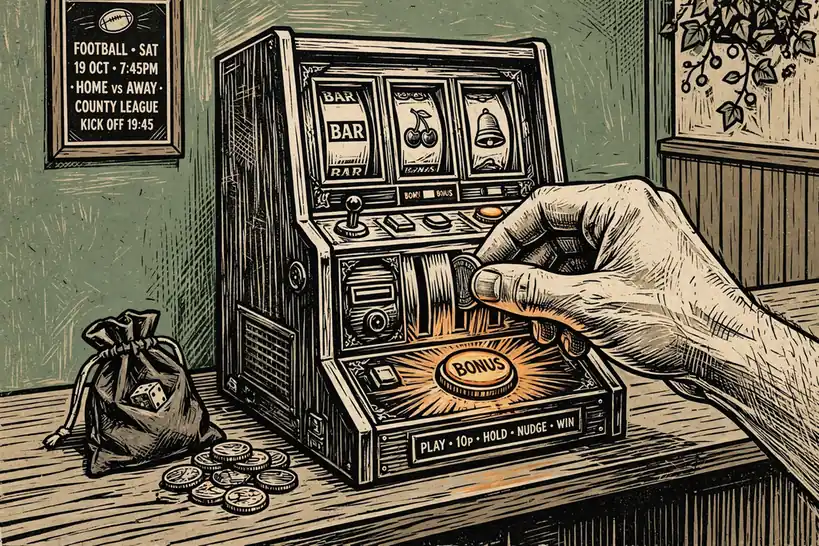
Traditional fruit machines were physical cabinets placed in licensed premises. The cabinet contained the display, controls, payment mechanism and internal equipment needed to run the game. A player interacted with the machine directly: selecting a stake, pressing a control and reading the result on the machine’s display.
Online classic slots separate these functions. The browser or app displays the reels and controls, while the gambling service operates the underlying system remotely. The visual experience may resemble a small cabinet with three reels, fruit symbols and a paytable, but the physical cabinet is no longer present. The phrase “online classic slots real money” therefore describes a digital gambling service using a classic-style game, not a pub machine transferred intact to the internet.
The same separation applies to free play. Free classic slot games and free online classic slot games can imitate the appearance and controls of a physical machine without accepting a cash stake. In that setting, the interface may still show reels, symbols and a result, but the activity is simulated rather than a play on a cash-prize gaming machine. “Play classic slot machines online free” is consequently a description of how the interface is used, not evidence that an online service has the same legal category as a physical machine.
The British pub reference point
The clearest British physical reference is the Category C machine. Category C machines are the classic British pub fruit machine, with a maximum stake of £1 and a maximum prize of £100. An alcohol-licensed pub is automatically entitled to up to two Category C or D machines if it notifies the local licensing authority.
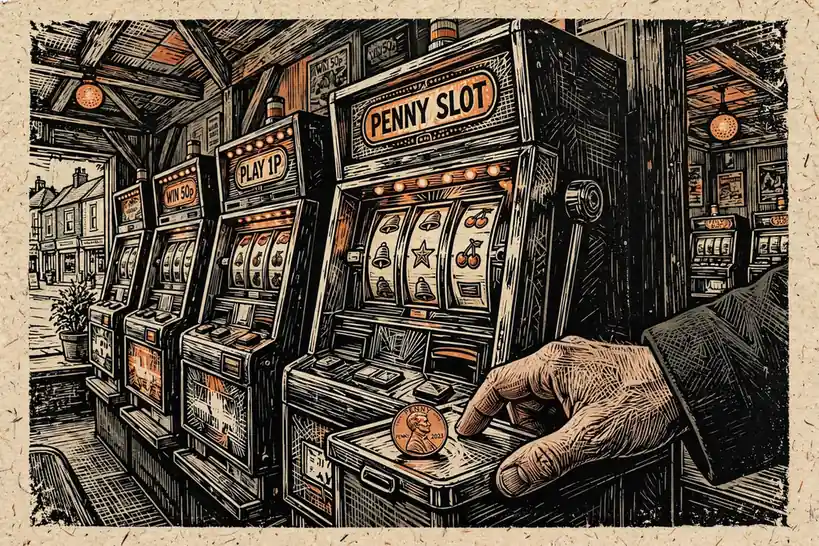
That description identifies a regulated type of gaming machine and its permitted limits. It does not identify every game that may look like a fruit machine. A cabinet showing fruit symbols could belong to another category, or could be an online presentation with no physical cabinet at all. The appearance is useful for recognising the tradition, but it does not determine the legal classification.
Category D provides another physical comparison. These gaming machines are generally low-stake fruit machine-style machines, coin pushers or crane grabs. Category D machines have no age restriction. Money-prize AWP machines in this category allow a 10p stake and up to a £5 cash prize. A crane grab is also a Category D example, but its prize is non-monetary rather than a cash payout. This shows why the word “fruit machine” alone is insufficient: machines with different functions and prize arrangements can sit within the same broad entertainment-machine tradition.
Machine category versus displayed game
The United Kingdom categorises gaming machines according to the maximum stake and prize available. The categories are A, B1, B2, B3, B3A, B4, C and D. These labels describe the regulatory class of the machine, not a visual style such as “classic”, “fruit” or “three-reel”.
A classic slot machine game can therefore be discussed at two separate levels:
- The game presentation: reels, symbols, controls and the way a result is displayed.
- The machine or service: the equipment or online gambling system delivering that game, together with its applicable rules and limits.
Confusing these levels creates inaccurate comparisons. A physical Category C machine can display a fruit-machine game, but a fruit-themed online game is not automatically Category C. Likewise, a free digital recreation may copy the look of a classic machine while offering no cash stake or prize. The label “classic” describes the design tradition; it does not, by itself, establish the legal status of the platform or the limits attached to play.
What “classic” means online
Online models usually preserve the recognisable features of the older format: a compact reel display, a limited visual field and a direct control sequence. They may be described as classic slot machine games because the presentation is intentionally simpler than a modern video game with complex scenes, multiple features or extensive animation.
That visual continuity explains why people search for classic slots real money, free classic slot machines or similar terms. They may be looking for the same familiar format in different settings: a physical cabinet, a cash-play online service or a no-stake simulation. The important question is not whether the screen resembles a pub fruit machine. It is which machine or service is actually being used, what stake and prize rules apply, and whether the displayed format is real-money gambling or simulated play.
How to Assess a Classic Slots Casino in the UK
Assessing an online casino that offers classic slots starts with a distinction: the website is not the same thing as the gaming machine categories used in physical UK premises. Category C, B1, B3 and other labels describe regulated gaming machines, while an online game is offered through a remote gambling service. You should therefore check both the casino’s online authorisation and the information shown for each game, rather than assuming that a familiar fruit-machine design carries a particular legal category.
Check the UKGC authorisation
An operator providing online gambling to consumers in Great Britain must hold a UK Gambling Commission operating licence. For online gambling, this is a remote operating licence. The Gambling Act 2005 is the primary legislation governing gambling in Great Britain, and the UK Gambling Commission issues operating, personal and premises licences.
Verify the operator’s name or licence number with the UKGC public register to ensure the domain matches the website you are using.
Before depositing, compare the operator’s name or licence number with the UKGC public register. Confirm that the domain listed on the register matches the website you are using. This check is more useful than relying on a logo, a marketing statement or a search result. A casino can describe itself as a classic slots site, but that description does not establish that it is authorised to provide online gambling in Great Britain.
The UKGC assesses matters including identity and ownership, finances, integrity, competence and criminality. Those checks relate to the operator’s suitability for licensing; they do not mean that every individual game will produce a particular result or that you will receive a particular return.
Examine the displayed return information
Return information should be visible in the game interface, help section or rules. For a regulated machine, the relevant return figure must be presented in the manner required for its category. The specific rule stated in the verified information is that B1 machines have no minimum RTP requirement, but their minimum average return must be displayed to the player.

That detail has two practical implications. First, a displayed percentage is information about the mathematical return specified for the machine, not a promise that a short session will produce that result. Secondly, the figure must be tied to the actual game or machine being offered. A general casino statement about “high returns” does not replace game-specific information.
When reviewing a classic-style online game, look for:
- the rules for winning combinations;
- the stake options available;
- the prize information;
- the displayed return information, where provided;
- any explanation of how the result is generated.
If these details are difficult to locate, you have less information with which to assess the product. Do not fill that gap with assumptions based on the game’s name, symbols or traditional appearance.
Separate online casino checks from premises rules
UK gaming-machine rules remain relevant when a website uses physical-machine language, but they should not be applied mechanically to an online title. Category C machines are the classic British pub fruit machine, with a maximum stake of £1 and a maximum prize of £100. An alcohol-licensed pub is automatically entitled to up to two Category C or D machines if it notifies the local licensing authority.
These facts describe physical premises and physical gaming machines. They do not prove that an online game is a Category C machine, nor do they establish that every online classic slot has the same stake or prize limits. An online casino should be assessed through its remote gambling authorisation and the rules displayed for its online games.
The same separation prevents other misleading comparisons. An Adult Gaming Centre licence permits unlimited Category B3, C and D machines, but that is a premises rule. It is not evidence that an online casino has unlimited access to those categories or that its online catalogue follows the same limits.
A crane grab machine is another useful boundary: it allows up to a £1 stake and up to a £50 non-monetary prize. Its operation and prize structure are different from a reel-based classic slot. A casino page that places several machine styles under one broad promotional label should not be treated as proof that their regulatory treatment or mechanics are identical.
Do not confuse presentation with suitability
A simple layout, fruit symbols and a small number of reels may make a game look familiar, but appearance does not tell you whether the casino is authorised, what return information applies or which stakes and prizes are available. The useful assessment is documentary and mechanical: verify the operator, read the game rules and identify the displayed return information.
No verified operators, brands or software providers are available for a ranked list here. That means there is no reliable basis for naming the best classic slots casino UK, the best classic slots sites or a best online classic slots casino. The same caution applies whether you intend to play classic slots for real money or are looking for free online classic slots with no download: free access may change the financial context, but it does not turn an unverified operator into a verified one.
A sound comparison therefore begins with evidence, not a ranking. Check the UKGC register, match the listed domain, inspect the game information and keep physical Category C rules separate from the conditions of an online gambling service.
Classic Slot Games and Their Core Mechanics
A classic slot game is a software model that produces results from a defined set of reels, symbols, paylines and rules. The visible cabinet, webpage or mobile interface is separate from that model. This distinction matters because the same type of game can be presented through different gaming machines or online interfaces, while the underlying rules determine how a spin is evaluated.
Reels, rows and symbols
The reels are the vertical sections that display symbols during a spin. In a traditional reel-based design, each reel contains an ordered sequence of symbols. When the game starts, the reels appear to rotate and then stop. The final visible arrangement is the outcome that the game evaluates.
A symbol is a graphic occupying one position on a reel. Classic designs commonly use simple visual themes, such as fruit, bells, bars or sevens, but the picture alone does not establish its value. The game’s paytable defines what each symbol means, which combinations qualify for a win and how much each qualifying combination returns relative to the selected stake.
The reel layout therefore has two functions. It provides the visual display and supplies the positions from which the game reads the result. A symbol that appears on screen is not automatically a winning symbol. Its effect depends on its position, the active payline and the rules attached to that particular game.
Paylines and winning combinations
A payline is a specified path through the reel display. It tells the game which positions must be compared when checking for a winning combination. On a simple layout, the line may run directly across the middle row. Other designs can use more than one route through the visible positions.
The number of active paylines is part of the game configuration. Selecting more lines changes which symbol paths are evaluated, but it does not change the symbols already produced by the spin. The stake settings and payline settings must therefore be read together: the game uses the chosen configuration to determine which combinations are eligible for a return.
A winning combination normally requires matching symbols in the positions defined by the payline rules. The exact direction, number of matching positions and treatment of gaps are game-specific details shown in the paytable. It is not technically accurate to assume that every matching picture on the screen creates a win, because a match outside an active line may have no effect.
Spin Outcome Process
The random outcome generator selects a result based on the game’s programmed rules.
The interface displays the physical movement of the reels to present the result.
The software compares the visible symbols against the active paylines and the paytable to determine a win.
Some classic casino slot games use a limited set of straightforward lines and symbols. That simplicity describes the presentation, not a universal rule. Each individual game still has its own paytable and evaluation logic. The paytable is the controlling reference when the visual layout appears ambiguous.
How a spin becomes an outcome
The game must select an outcome before it displays the completed reel arrangement. A random outcome generator determines the result within the game’s programmed rules. The animation that follows is a presentation of that result, not a second decision made by the moving graphics.
Once the reels stop, the software reads the visible positions against the active paylines. It then compares the resulting symbol combinations with the paytable. If a qualifying combination is present, the game calculates the corresponding return. If no qualifying combination is present, the spin produces no winning return.
This sequence separates three events that are often treated as one:
- the game selects an outcome;
- the interface displays the reel positions;
- the rules evaluate those positions.
The stopping speed, sound effects and visual emphasis can make the result easier to follow, but they do not explain why a combination wins. Only the programmed outcome rules and the selected game settings determine that.
The paytable as the game’s rule set
The paytable is more than a list of attractive symbols. It is the compact specification for the game. It should identify the available symbols, the combinations they form and the return associated with each qualifying result. It may also explain special symbols, line requirements or other features where those exist.
Reading the paytable before playing allows you to predict how the software will interpret a completed display. For example, you can determine whether a symbol must appear on consecutive reels, whether a line must be active and whether a particular symbol has a special function. Without that information, a visual result cannot be interpreted reliably.
The displayed return information is also separate from the paytable’s individual combinations. A paytable explains the local rule for a particular result; return information describes the game’s theoretical long-run relationship between stakes and payouts. It does not predict the return from one spin or guarantee that a short sequence will resemble the stated figure.
Game versus gaming machine
A classic slot game and a gaming machine are not interchangeable terms. The game is the software-defined ruleset: reels, symbols, paylines, outcomes and paytable. The gaming machine is the regulated equipment or platform through which that game is made available.
In the UK, gaming machines are categorised according to the maximum stake and prize available. The relevant category belongs to the machine offering the game, not to the informal label “classic”. A familiar fruit-themed interface does not by itself identify the machine category or establish the legal conditions under which it may be offered.
The distinction also applies online. An online casino interface can present a classic-style reel-based game, but the game’s visual design does not replace the regulatory information attached to the gambling service. The game rules explain how a spin is evaluated; the operator, machine or service framework determines the applicable controls and displayed information.
What a completed display can and cannot tell you
A completed reel display tells you which symbols are visible and allows you to compare them with the active paylines and paytable. It does not, by itself, reveal the game’s full probability model, return information or regulatory category. Those details must come from the displayed game information and the relevant operator or machine documentation.
This is why a classic fruit slot game should be read as a mechanical system rather than judged only by its appearance. The pictures provide the interface, while the reels supply positions, the paylines define the comparisons and the paytable determines which combinations count. Once those parts are separated, the result of a spin becomes a rule-based calculation rather than an interpretation of the animation.
How to Play a Classic Slot Online
Playing a classic slot online is a short sequence, but each stage has a specific purpose. The visible controls start the game; the information panel explains what the game is doing and how its displayed rules should be read.
1. Open the game and inspect the interface
Before starting, identify the reels, stake control, spin button, paytable or help icon, and any balance display. The paytable explains which symbols and combinations produce outcomes. If the interface includes an information panel, open it before choosing a stake. This lets you understand the available settings rather than treating the spin button as the only relevant control.
A classic-style game may show a compact reel layout and a small number of visible controls. The appearance alone does not tell you how every result is calculated, so use the displayed game information as the reference.
2. Choose the stake
Set the stake using the controls provided by the game. Check whether the amount shown applies to one spin and whether the interface separately displays the selected paylines or total stake. Do not assume that changing one value changes all others: the control labels and paytable should make the relationship clear.
If the game is offered in a practice mode, the stake may be simulated rather than deducted from a cash balance. The interface should indicate the mode in use. A displayed balance, credit value or stake amount is not sufficient by itself to establish whether the play is for real money.
3. Start one spin
Select the spin control after reviewing the chosen settings. The reels then animate and stop, producing a symbol arrangement. Avoid changing settings while the spin is being initiated or resolved. Wait for the result to appear fully, including any win message, highlighted combination or updated total.
The result is determined by the game system, not by how quickly you press the button. Stopping or speeding up the visual reel animation does not turn the outcome into a skill-based decision.
4. Read the result
Compare the final symbols with the paytable and the active paylines shown by the interface. A matching pattern matters only when it corresponds to a listed winning combination and appears in the required position. If no qualifying combination is shown, the spin has not produced a displayed win.
Check the result summary as well as the reels. It may show the stake, any return for that spin and the updated balance or credit display. These values describe the completed transaction within the game; they do not predict the next outcome.
5. Check the game information again
Before another spin, review the displayed rules whenever a setting is unclear. Confirm the stake, paylines, symbol values and any relevant return information available in the game help section. Then choose whether to continue, alter the settings or leave the game. There is no mechanical advantage in increasing a stake because a previous spin did not produce a win.
Real-Money Classic Slots: Stakes, Returns and UK Controls
Playing classic slots for real money changes the meaning of every spin: the stake is deducted from your balance, and any prize is credited according to the game’s displayed rules. The visual format may remain simple, but the financial result is not simulated. Before starting, check the stake setting, the available prize information and the return details shown for that machine or game.
Stakes and prizes
A real-money classic slot should make the chosen stake clear before you confirm a spin. The maximum permitted amount depends on the relevant gaming-machine category rather than on the word “classic” alone. For example, Category B1 gaming machines have a maximum stake of £5 and a maximum prize of £10,000. They may also have a linked progressive jackpot of up to £20,000 on a premises basis.
These figures describe regulatory limits, not a promise that a particular game offers the maximum stake or prize. The actual settings must be read from the machine interface and its paytable. A lower available stake or prize does not indicate a fault; it simply reflects the configuration of that product.
Regulatory Limits
Attention Maximum stakes and prizes are determined by the machine category, not the game’s visual style.
Return information
Return-to-player information describes the theoretical percentage returned over a sufficiently large number of plays, not the result of your next spin. It cannot predict whether an individual session will win or lose. For Category B1 machines, there is no minimum RTP requirement, but the minimum average return must be displayed to the player. The displayed figure therefore provides information about the machine’s theoretical design, not a guaranteed personal return.
Real-money play also makes the displayed rules important for checking how wins are calculated, whether the stake applies per spin or another permitted unit, and which prize limits govern the machine. Read these details before committing funds rather than inferring them from the reels or symbols.
The controls applying to regulated gaming machines cover more than the game screen. Category B1 machines can only be made available in casinos, and the relevant machine information must be displayed. Treat the stated stake, prize limits and return information as operating conditions, not as an earnings forecast.
What “Classic Slot UK” Means in Practice
In the UK, “classic slot” is a familiar description rather than a formal gaming-machine category. It usually points to the traditional fruit-machine format: a straightforward reel-based game associated with symbols, visible winning lines and a compact control layout. The legal classification depends on the machine’s permitted stake and prize, not on whether its appearance looks traditional.
The closest physical reference is the Category C gaming machine. Category C machines are the classic British pub fruit machine, with a maximum stake of £1 and a maximum prize of £100. This explains why a UK audience may use “classic slot” to describe a particular style while the rules use a category name instead. The two terms are related, but they are not interchangeable: “classic” describes the format, whereas Category C identifies a regulated machine class.
Location also matters. Category C machines may be made available in pubs, licensed family entertainment centres, clubs, bingo premises, adult gaming centres, betting shops, tracks with pool betting and casinos. A pub or another alcohol-licensed premises is automatically entitled to two Category C or D gaming machines after notifying the local licensing authority.
That physical setting is the practical UK meaning behind the phrase. It refers to the recognisable fruit-machine tradition and, where a regulated machine is involved, the premises and category rules governing its availability. An online title may reproduce the same visual language, but its presentation should not be treated as proof that it is legally a Category C machine. For a precise reading, separate the game’s classic design from the regulatory status of the machine or online gambling service offering it.
Free Classic Slots Without a Cash Stake
A free classic slot lets you examine a slot-style game without committing a cash stake. The interface can show reels, symbols, paylines, a stake control, a spin button and a results display, but the session is simulated rather than a real-money gambling transaction.
This makes free play useful for understanding the control layout. You can see how a selected stake changes the amount assigned to a spin, how the reels stop, and how the game presents a winning or losing result. You can also inspect the paytable, where the symbols and qualifying combinations are explained. The purpose is observation: you are learning how the interface communicates an outcome, not testing a method for producing one.
The distinction matters because a simulated result does not create a cash prize, and a simulated loss does not remove money from your account. Free play therefore cannot demonstrate what your financial result would be in real-money gambling. It also does not turn a game into a regulated gaming machine category by itself; the legal classification depends on the relevant machine and gambling framework, not simply on the visual design of the reels.
No named free game is identified here because there are no verified product details to support such a recommendation. Instead, assess the information shown by the particular interface. Check whether the paytable is available, whether the stake and result are clearly labelled, and whether the game distinguishes practice mode from cash play.
You can use this format to become familiar with classic-slot controls and terminology before deciding whether to play for money. Keep the two modes conceptually separate: free spins are a demonstration of the game interface, while real-money play involves an actual stake and falls within the applicable gambling controls.
Classic Fruit Slots and the British Pub Tradition
A classic fruit slot is closely associated with the British pub machine: a compact gaming machine designed around familiar fruit symbols, straightforward displays and a clearly defined stake and prize structure. The important point is that “fruit” describes the visual and cultural format, while the legal classification depends on the machine’s permitted stake, prize and location.
For the traditional pub reference point, that classification is Category C. A Category C machine is the classic British pub fruit machine, with a maximum stake of £1 and a maximum prize of £100. These limits describe the machine’s permitted configuration; they do not mean that every play must use the maximum stake or that every result produces a prize.
The pub setting also matters. An alcohol-licensed pub is automatically entitled to up to two Category C or D machines when it notifies the local licensing authority. That entitlement connects the familiar fruit-machine format with a specific premises arrangement. It is not a general description of every gaming machine found in a pub, and it does not turn an online game into a Category C machine.
When you see a digital fruit-themed game described as a classic fruit slot, treat the phrase as a description of its style rather than proof of its legal category. An online game may reproduce the visual language of the pub machine, but the physical Category C definition applies to a regulated gaming machine placed in an eligible premises. The same symbols therefore do not establish the same legal status.
This distinction helps you read the term accurately: the British pub tradition supplies the recognisable fruit-machine format, while Category C supplies the specific reference point of a £1 maximum stake, a £100 maximum prize, and permitted placement in the relevant pub setting.
Classic Slot Machine Symbols: What They Tell You
Classic slot machine symbols are not decoration. They form a visual shorthand for the game’s paytable, showing which images can create winning combinations and how the interface records a result.
Reading the symbol set
Start with the paytable rather than guessing from appearance. Each symbol should have a defined value or combination rule. The paytable explains whether a symbol must appear on a particular payline, how many matching symbols are required, and what happens when different symbols appear together.
Traditional imagery often includes fruit, bells, bars and sevens, but the picture alone does not determine its value. A familiar symbol may be relatively valuable in one game and less valuable in another. Its meaning comes from the displayed paytable.
Symbols and winning combinations
A combination is assessed according to the game’s stated layout and paylines. Matching images may need to appear on adjacent reels or in a specified order. A result that looks visually balanced is not automatically a win, and symbols scattered across the screen may not count if they do not follow the relevant line or combination rule.
Some interfaces also show special symbols. Their function must be read from the paytable: a symbol may substitute for another, trigger a separate feature, or have no effect outside a particular combination. Do not infer any of these functions from the artwork.
What the interface confirms
After a spin, compare the visible symbols with the paytable and the highlighted line, if one is shown. This lets you distinguish an actual winning combination from a display effect or a near match. The clearest reading method is mechanical: identify the symbols, locate their positions, check the active line, and then apply the listed rule.
This approach makes classic slot machine symbols useful information rather than visual shorthand that can be misread.
Published by the Guide Casinouk Gb team.